
← Audit & Assurance Services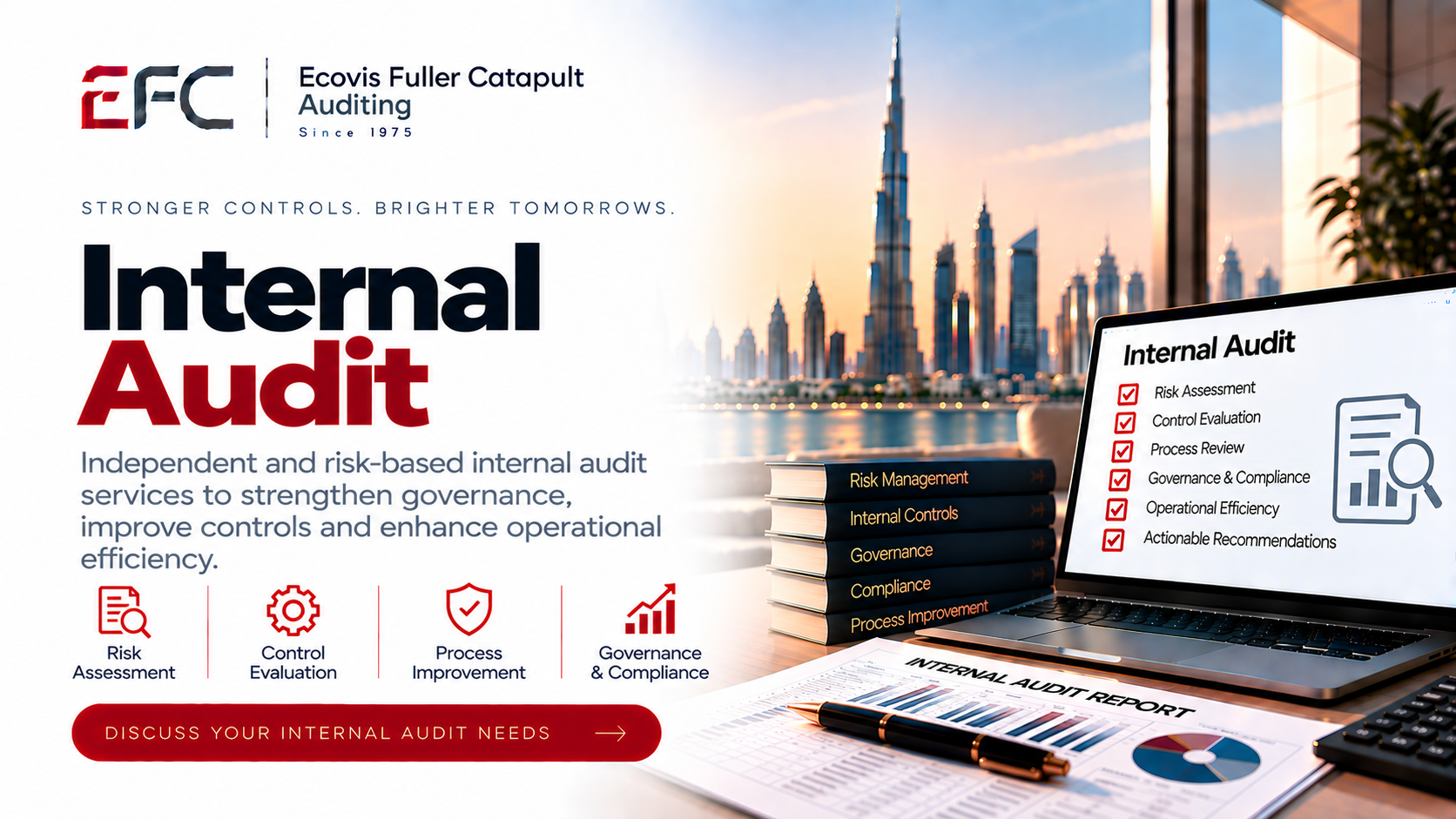
Internal Audit
Internal audit services reviewing your controls, processes and risk exposure, delivered independently of your finance team.
Internal audit looks inward — testing whether your controls, processes and policies actually work as intended, independent of the finance team that operates them day to day. We review specific processes (procurement, payroll, revenue, inventory) or run a broader risk-based internal audit program, identifying control gaps and inefficiencies before they turn into losses, fraud, or external audit findings.
What is it?
An independent review of a company's internal controls, processes and risk management, conducted separately from the team that operates those processes day to day.
Who needs it?
Companies wanting assurance their controls actually work, businesses that have grown quickly without formalizing processes, and organizations preparing for external audit, investment, or a governance upgrade.
Companies wanting assurance their controls actually work, businesses that have grown quickly without formalizing processes, and organizations preparing for external audit, investment, or a governance upgrade.
Benefits
- Identifies control gaps before they cause losses or fraud
- Independent view, free of the blind spots that come from operating a process daily
- Smoother external audits when internal controls are already strong
- A practical roadmap for process and control improvements
Our Process
1. Assess risk areas and agree the internal audit scope
2. Review and test controls and processes against best practice
3. Identify gaps, inefficiencies and control weaknesses
4. Deliver a findings report with prioritized recommendations
Cost Factor ~ Based on number of processes/areas reviewed, business size and complexity, and depth of testing required.
Timeline ~ A focused internal audit of one or two processes typically takes 2–3 weeks; a broader risk-based program can take 4–8 weeks.
FAQs
1. Is internal audit only for large companies?
No — SMEs benefit significantly from internal audit, particularly after rapid growth when processes that worked at a small scale start breaking down. A focused review of one or two high-risk areas (like cash handling or procurement) is often a practical starting point for smaller businesses.
2. What's the difference between internal audit and external audit?
External audit provides an independent opinion on financial statements for outside stakeholders, while internal audit reviews internal controls and processes for management's own benefit, with no requirement to be filed externally. Many businesses use internal audit findings to strengthen controls ahead of their external audit.
3. What kinds of issues does internal audit typically find?
Common findings include inadequate segregation of duties, weak approval controls over payments, inventory or asset tracking gaps, and processes that rely on one person with no backup or oversight. These are exactly the kinds of gaps that create fraud or error risk if left unaddressed.
Common findings include inadequate segregation of duties, weak approval controls over payments, inventory or asset tracking gaps, and processes that rely on one person with no backup or oversight. These are exactly the kinds of gaps that create fraud or error risk if left unaddressed.
Who needs it?
Contact us to discuss whether this fits your situation.
Our process
Every engagement starts with a scoping consultation — get in touch to discuss the steps involved.
Timeline
Varies by engagement scope — ask us for an estimate.
Cost factors
Fees depend on scope and complexity — contact us for a tailored quote.
Ready to talk?
Book a confidential consultation with one of our partners to discuss internal audit.
Book a ConsultationTrusted By











What Our Clients Say
“If you want a trustworthy and reliable company for your Accounting needs please choose Catapult Accounts. I have been with them for many years”

Ms. Donna Rayson
CEO · Seven oaks British Nursery